


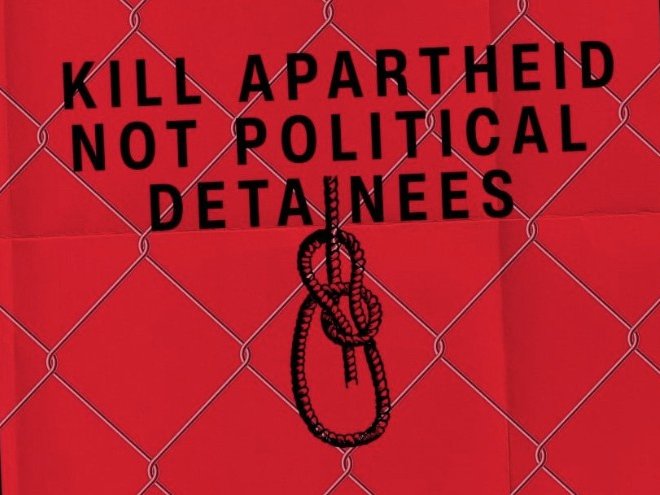
The new death penalty laws and their significance
Published April 17, 2026
Death Penalty for Terrorist Laws, passed by israeli Lawmakers on 30 March 2026
Summary of key information
The primary purpose of legislation is to create a death penalty for anyone who commits what israel considers an act of terrorism against the state of israel, its citizens and its residents:
"(c) Notwithstanding the provisions of subsection (a), he who intentionally causes the death of a person with the aim of negating the existence of the State of Israel in circumstances as stated in subsection (a) (10) - shall be sentenced to death or life imprisonment, and one of these punishments only."
This is incredibly vague, and the law does not include criteria for what constitutes this act. It does not illustrate what action, circumstances and mental preparation is required from someone to have this applied to them.
The law applies to anyone living in the "area of Judea and Samaria" (read as the Occupied West Bank, which the ICJ ruled as an illegal occupation on July 19, 2024), who is "a resident but excludes Israeli citizens and Israeli residents" (meaning this can only be applied to Palestinians and/or religious minorities present in the country such as Christian Armenians).
Moreover, only an israeli military court can impose this sentence (only Palestinians are tried in military courts; ‘Arab Israelis’ are not subject to this law, further evidencing apartheid). The death penalty can be applied even when the decision is not unanimous. Even in the United States of America, enforcing the death penalty requires a unanimous decision by the judges presiding or a unanimous decision from the jury.
The prosecution does not even need to seek the death penalty; the court can impose it without request. This indicates a drastic removal of all standard israeli judicial safeguards. The execution date is immediately set at a length of 90 days, meaning there is no appropriate allotment of time for appeal and to reverse the decision. Only the Prime Minister can stay execution and this is limited to 180 days. The new laws do not allow family members to see the person who has been sentenced. Once they are convicted, they can only be seen by the following:
1) A prison officer;
2) A religious official authorized by the Prison Director, according to the religion of the person sentenced to death, if the person sentenced to death has so requested;
3) An official visitor by virtue of his office pursuant to Section 72;
4) To an individual whom the Minister has authorized to serve as an official visitor for the purpose of this Article pursuant to Section 71;
5) To an attorney as stated in Section 54a;
6) To a physician;
The commissioner may, under exceptional circumstances for special reasons, authorise a person not listed. Also, a person deemed to have been found guilty can only meet with two attorneys (limiting their right to choose and seek their own counsel).
The law states that the identities of the prison officers who carry out the executions should be protected. No family member of the person can attend the executions, only the family of the victim, a physician and an Israeli official.
Analysis
The bill's impact is fundamentally discriminatory against Palestinians living in the West Bank, as well as any Palestinian forcibly imprisoned by israel, like the many Palestinians taken prisoner from Gaza since October 2023. It further demonstrates the separate and harsher legal systems imposed on Palestinians in comparison to israelis. As illustrated by the wording "resident of the area excluding Israeli citizens or an Israeli resident", an israeli would not be punished in the same way for the same crime. This means Palestinians are tried under different laws and courts. And without the need for a unanimous verdict and with judicial discretion the death penalty can easily be obtained.
The bill clearly institutionalises discrimination, demonstrating even more so a system of oppression built primarily for Palestinians. It denies Palestinians’ fundamental rights of due process and equal protection. Palestinians now face officially (as they always have been unofficially), a unique risk of execution, which fulfils the definition of an apartheid state as a crime against humanity under the Rome Statute and the International Convention on the Suppression and Punishment of the Crime of Apartheid.